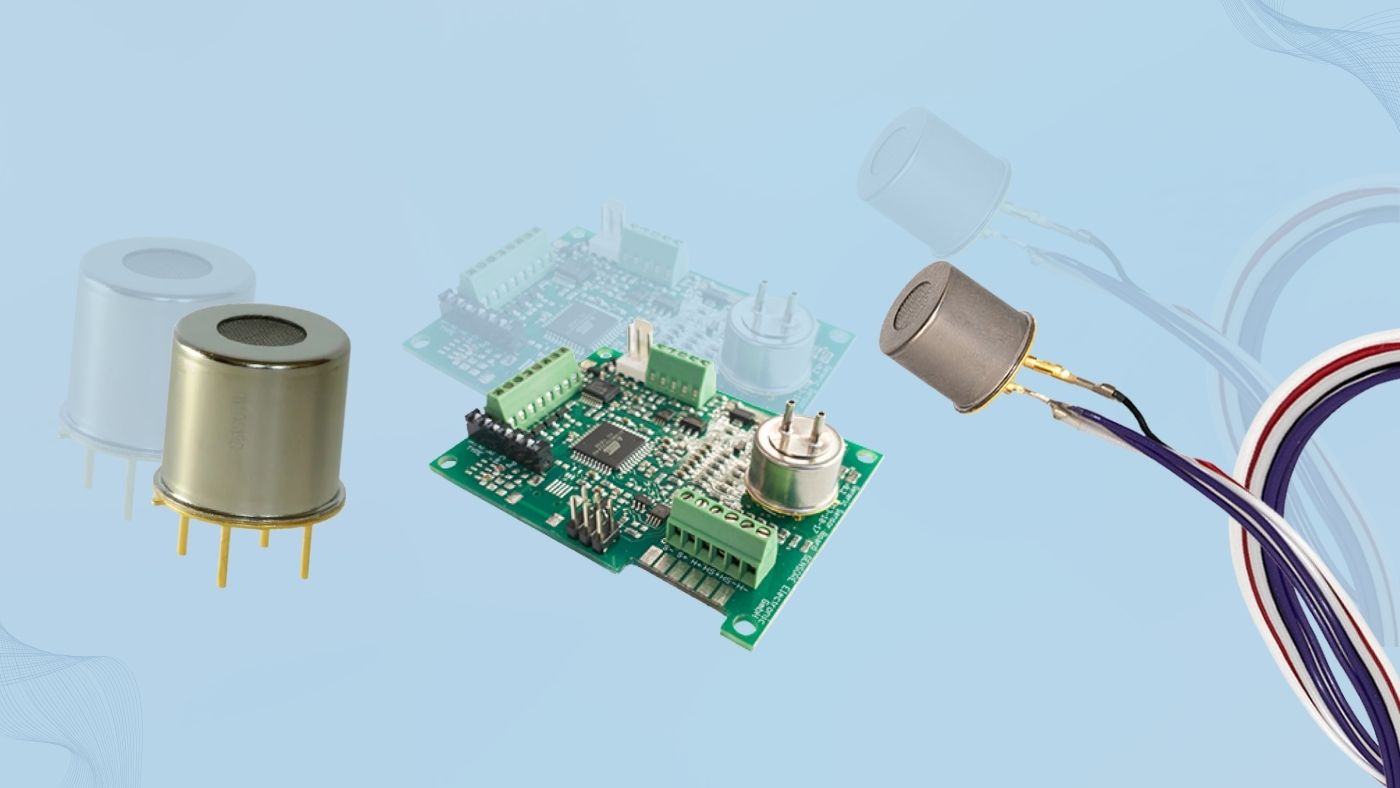
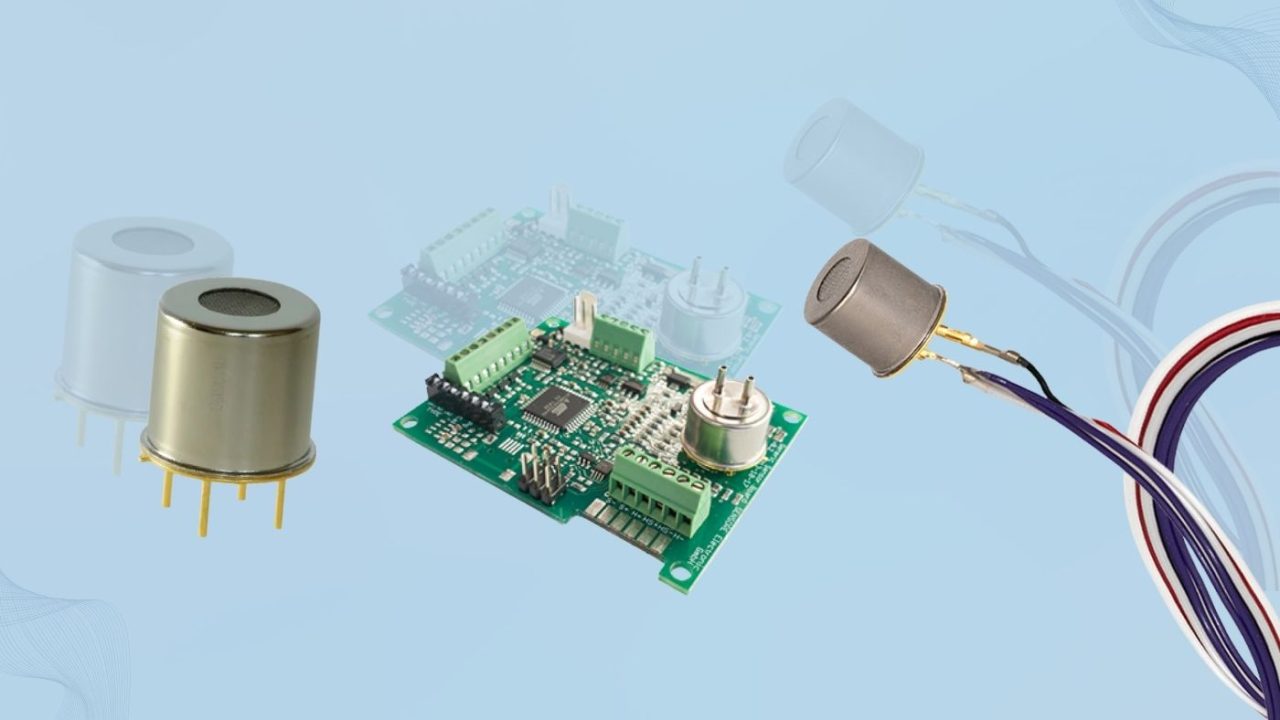
The discontinuation of Fujikura oxygen sensors presents a significant lifecycle challenge for OEM manufacturers supporting existing equipment and developing future product generations.
Replacing an obsolete oxygen sensor is rarely a simple component swap. It requires careful evaluation of system compatibility, validation requirements, regulatory considerations, and long-term product support.
Although component obsolescence is a normal part of every product lifecycle, a proactive response can significantly reduce engineering effort, minimize production disruption, and protect future supply continuity.
OEM manufacturers can also benefit from understanding how complete oxygen monitoring systems are designed and integrated across industrial applications before evaluating replacement options. A replacement decision should consider not only the sensor itself, but also the complete measurement chain, including electronics, calibration strategy, and system requirements.
Table of contents
- Why Fujikura Sensor Obsolescence Matters
- Evaluating a Replacement Sensor
- Qualification Before Deployment
- Managing the Transition
- Planning for Long-Term Supply Continuity
- Common Mistakes When Replacing Discontinued Oxygen Sensors
- FAQ
Why Fujikura Sensor Obsolescence Matters
Component obsolescence affects far more than procurement. It can influence engineering resources, manufacturing schedules, regulatory compliance, and the long-term support strategy for installed equipment. When a critical sensor reaches the end of life, OEM manufacturers must consider the impact across the entire product lifecycle, from engineering and production to after-sales support.
The consequences vary depending on the application and product lifecycle stage, but commonly include:
- Limited component availability
- Increased procurement costs
- Production delays
- Qualification of replacement components
- Design or documentation updates
- Long-term service and spare parts planning
Before selecting a replacement, engineering teams should also assess how the discontinued sensor is used within their products. Questions such as whether the equipment is still in production, how many systems are installed in the field, and whether regulatory approvals could be affected will influence the most appropriate migration strategy.
By understanding these factors early, OEMs can move from a reactive response to a structured replacement plan that minimizes engineering risk and supports long-term product continuity.
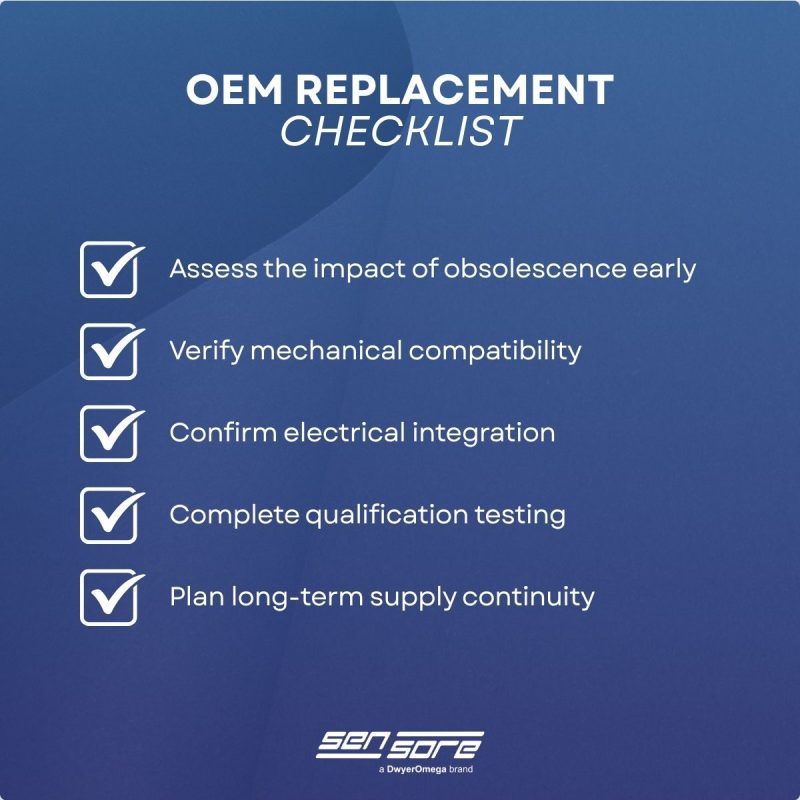
Evaluating a Replacement Sensor
Selecting a replacement involves more than comparing datasheets. Even sensors with similar specifications may require changes to the mechanical design, electronics, firmware, or validation process.
For this reason, replacement decisions should always be based on a system-level assessment rather than on individual specifications alone.
Differences between sensor designs do not necessarily indicate differences in measurement capability. Engineers should evaluate how the replacement integrates into the complete system rather than focusing only on external characteristics.
Mechanical Compatibility
The replacement sensor should integrate with the existing equipment without introducing unnecessary redesigns or assembly complexity.
Key considerations include:
- Overall dimensions
- Mounting arrangement
- Connector type
- Cable routing
- Service accessibility
- Gas flow path and environmental sealing requirements
Addressing these factors early can help avoid costly mechanical modifications later in the development process.
Electrical and Interface Compatibility
Mechanical compatibility alone does not guarantee successful integration. Engineers should also verify that the replacement aligns with the existing electrical architecture and control system. In addition to mechanical fit, the electrical characteristics should be checked to ensure proper integration with the existing Fujikura electronics.
Important considerations include:
- Heater voltage and power
- Sensor output characteristics
- Pin configuration
- Signal conditioning
- Controller compatibility
Where firmware updates are required, identifying them early can simplify validation and reduce implementation time.
Performance Requirements
A replacement sensor should meet the application’s performance requirements throughout its expected operating life, rather than simply matching individual datasheet values.
Evaluation should include:
- Measurement range
- Response time
- Stability
- Repeatability
- Operating temperature
The objective is to maintain consistent system performance while minimizing the need for redesign or recalibration.
Environmental Conditions
The operating conditions should be reviewed to ensure that the selected Sensore replacement is suitable for the application.
Key conditions include:
- Operating temperature
- Pressure
- Vibration
- Humidity and condensation
- Gas composition
- Exposure to contaminants or aggressive gases
These conditions can influence sensor performance, response time and lifetime.
Qualification Before Deployment
Selecting a technically compatible replacement is only the first step. Before introducing a new oxygen sensor into production, OEM manufacturers should complete a structured qualification process to verify that the replacement performs reliably under real operating conditions.
A typical qualification program should include:
Laboratory Testing
Confirm that the selected replacement meets the performance requirements of the application under controlled conditions.
System Validation
Evaluate the replacement within the complete OEM system, including electronics, firmware, sensor positioning and mechanical integration.
Environmental Verification
Verify sensor performance under representative operating conditions, including temperature, pressure, vibration, humidity, gas composition, airflow and potential contamination.
Documentation Review
Review the relevant datasheets, technical documentation and application requirements before implementation.
Production Approval
Complete cross-functional approval involving engineering, manufacturing, quality, and procurement before full production release.
Managing the Transition
Introducing a replacement sensor should be treated as a structured engineering project rather than a purchasing activity. Early planning allows OEM manufacturers to reduce development risk while maintaining production continuity.
Where possible, a phased migration strategy offers significant advantages by allowing manufacturers to validate the replacement during controlled production runs before full implementation.
Recommended practices include:
- Begin planning as soon as obsolescence is announced
- Prototype before full production
- Involve procurement early to confirm long-term availability
- Document all design changes
- Manage inventory to support a phased transition
This approach helps minimize production disruption while simplifying future maintenance and product support.
Planning for Long-Term Supply Continuity
Replacing an obsolete sensor solves an immediate problem, but OEM manufacturers should also consider how to reduce the risk of future component shortages.
Long-term supplier relationships can simplify future engineering changes by providing better technical support, product roadmaps, and advance notification of lifecycle updates. Working with a supplier that provides application engineering support can help reduce the effort required during future product updates.
When evaluating a replacement supplier, consider:
- Product lifecycle management
- Manufacturing capacity
- Technical support
- Documentation quality
- Supply chain resilience
- Product lifecycle communication
Selecting a supplier with a clear commitment to long-term availability can reduce future redesign effort while improving confidence throughout the equipment lifecycle.
Common Mistakes When Replacing Discontinued Oxygen Sensors
Replacing a discontinued oxygen sensor often involves more than selecting a technically compatible component. Many integration challenges arise when important engineering considerations are overlooked in the early stages of a project.
The table below highlights some of the most common mistakes and their potential impact.
| Common Mistake | Why It Creates Risk |
|---|---|
| Selecting a replacement based only on physical dimensions | Mechanical or electrical integration issues |
| Delaying replacement planning until inventory is exhausted | Production disruption and higher engineering costs |
| Skipping formal qualification | Increased reliability and validation risks |
| Focusing only on the initial purchase cost | Higher lifecycle costs |
| Overlooking long-term supplier support | Future component obsolescence |
Most of these issues can be avoided by treating sensor replacement as part of a broader product lifecycle strategy rather than as an isolated purchasing decision.
Conclusion
Replacing a discontinued Fujikura oxygen sensor requires more than checking mechanical dimensions. Electrical characteristics, operating conditions and system integration should also be reviewed before production implementation.
Sensore zirconia oxygen sensors use the same proven limiting current ZrO₂ measurement principle and provide mechanically compatible replacement options for selected Fujikura sensors. With proper qualification and testing, they can help minimize redesign effort and support long-term product availability.
Sensore supports customers throughout the replacement process, from selecting the suitable sensor and reviewing application requirements to integration, testing and qualification within the existing system.
Continue Exploring
Planning an oxygen sensor replacement or developing new OEM equipment?
Explore these related resources:
- Replacing a Fujikura Oxygen Sensor Without Redesigning Your OEM System
- Why Pre-Calibrated SMART Oxygen Measurement Systems Reduce Cost and Downtime
- Fujikura Oxygen Sensor Replacement
FAQ
What should OEMs do when a critical oxygen sensor is discontinued?
When a sensor reaches the end of its life, OEM manufacturers should assess replacement options early, evaluate compatibility, complete qualification testing, and establish a transition plan to minimize disruption.
Does replacing a discontinued oxygen sensor always require a redesign?
Not necessarily. The level of redesign depends on mechanical integration, electronics, firmware, validation requirements, and application conditions.
How can OEM manufacturers reduce the risk of future component obsolescence?
Long-term planning is essential. Choosing a supplier with reliable manufacturing, strong technical support, clear documentation and proactive lifecycle communication can reduce future redesign effort and improve supply continuity.