In additive manufacturing (AM), oxygen control is critical not only inside the build chamber but across the entire production workflow, from powder handling to post-processing. While inert atmospheres in the build chamber help ensure part quality, risks and performance impacts also arise when metal powders are moved, conditioned, and reused. Monitoring oxygen concentrations throughout the entire AM process improves process stability, enhances part consistency, increases safety margins, and reduces unplanned downtime.
Discover how Sensore’s OXY-ProXT maintains optimal inert atmospheres in our application page for building chamber environments.
Sensore Electronic’s OXY-ProXT and Microx ProSafe SIL2 solutions offer robust oxygen-monitoring capabilities for AM environments, enabling OEMs, production facilities, and process engineers to achieve reliable atmosphere control at every stage.
Why Oxygen Control Matters Throughout the AM Workflow
In metal AM, even small concentrations of oxygen can:
- lead to unwanted oxidation of powder particles
- increase combustion or explosion risk in powder handling areas
- reduce mechanical performance or increase porosity in finished parts
- complicate compliance with internal safety policies
A complete oxygen monitoring strategy enables manufacturers to maintain controlled conditions throughout powder storage and handling, as well as during build chamber and depowdering operations.
Additive Manufacturing Workflow — Where Oxygen Monitoring Should Be Deployed
- Build Chamber — Controlled Inert Atmosphere
Inside the build chamber, oxygen must be suppressed to ensure:
- consistent melt pool behaviour
- predictable material microstructure
- high mechanical properties in finished parts
For a deeper understanding of the role of zirconia oxygen sensors in additive manufacturing, see our dedicated blog here
Transmitters like OXY-ProXT deliver accurate, repeatable oxygen measurements to support gas purge control and real-time process monitoring during printing.
Typical applications:
- chamber environment control
- gas purge and flow verification
- quality assurance data logging
Learn more about the OXY-ProXT Oxygen Transmitter
- Powder Handling & Conveying — Protect Powder Integrity
Before printing begins, powder may be:
- transferred between containers,
- sieved or conditioned,
- loaded into powder feeds.
At these stages, exposure to oxygen and moisture can degrade powder quality, affecting print consistency and increasing the risk of reactive particle behaviour.
Integrating oxygen monitoring into powder handling systems helps ensure:
- powder chemistry remains stable,
- powder reuse does not introduce oxidation,
- traceability across production steps.
Discover how our sensors are utilized throughout the additive manufacturing workflow to safeguard powder integrity and maintain controlled atmospheres.
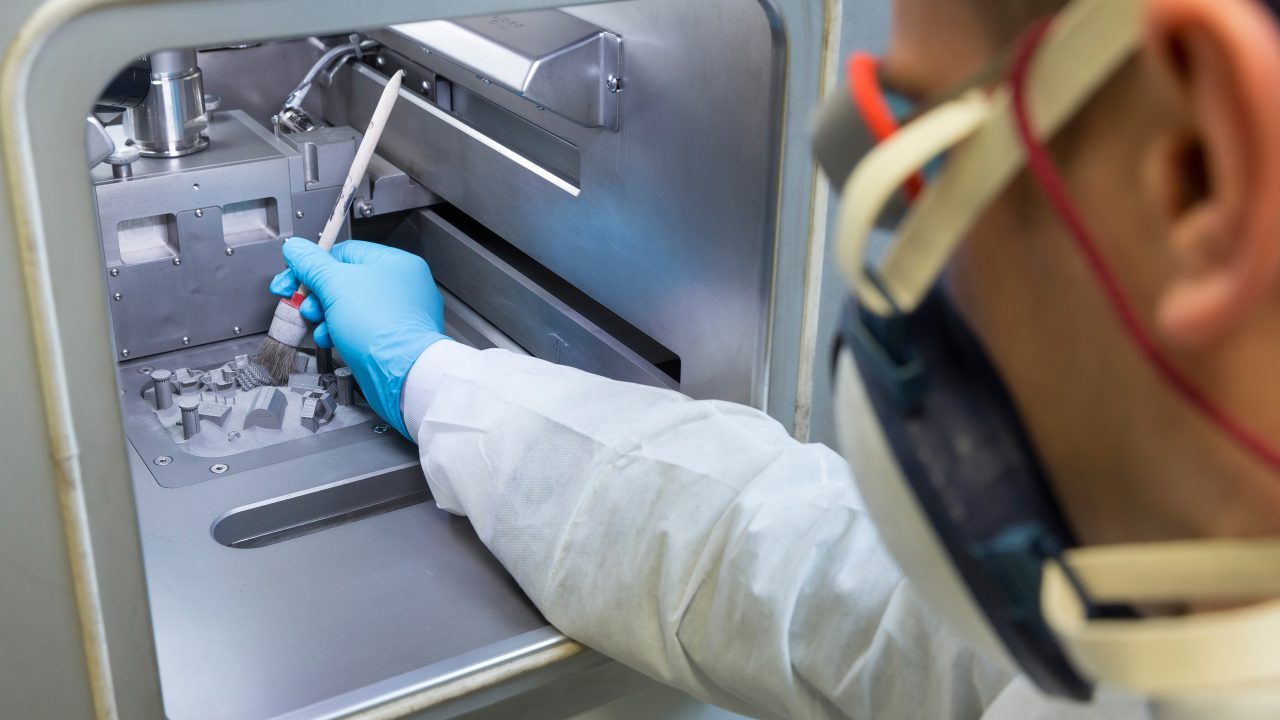
- Depowdering & Post-Processing — Safety and Atmosphere Control
After a build completes, depowdering and post-processing steps often involve:
- enclosed workstations,
- fine reactive powders,
- residual inert atmospheres mixing with air.
Monitoring oxygen in these environments helps reduce:
- fire and explosion risk,
- operator exposure to unsafe conditions,
- unscheduled shutdowns.
The Microx ProSafe SIL2 is designed for safety-critical applications where validated, reliable oxygen monitoring supports risk mitigation and safety interlocks.
Learn more about Microx ProSafe SIL2
Benefits of Comprehensive Oxygen Monitoring in Additive Manufacturing
By deploying robust oxygen sensors throughout the AM workflow, manufacturers can achieve:
- Improved part quality — controlled oxidation in powder and during printing
- Enhanced safety — reduced ignition risk in powder handling and depowdering
- Process visibility — data for QA, traceability, and optimisation
- Operational efficiency — fewer build failures and maintenance interruptions
Monitoring oxygen is not only about the build chamber; it’s about maintaining stable atmospheric conditions wherever reactive materials and equipment interact.
Challenges Oxygen Monitoring Helps Solve
Oxygen control across AM workflows addresses common production challenges:
- Unstable inert atmospheres during purging or chamber cycling
- Powder degradation from oxygen and moisture exposure
- Safety risks in post-processing and depowdering areas
- Inconsistent build results due to environmental variation
Oxygen transmitters, such as OXY-ProXT and Microx ProSafe SIL2, provide accurate and long-term measurement capabilities, as well as integration flexibility across AM systems.
Frequently Asked Questions (FAQ)
Q: Where in my AM workflow should oxygen sensors be installed?
A: Key locations include inside the build chamber, at powder handling and transfer points, and in depowdering/post-processing environments where combustible powders and oxygen can mix.
Q: What’s the difference between OXY-ProXT and Microx ProSafe?
A: OXY-ProXT is optimised for high-precision oxygen measurement in process control environments, while Microx ProSafe SIL2 is designed for safety-critical monitoring where validated, dependable sensing supports hazard mitigation.
Q: How does oxygen monitoring improve part quality?
A: It ensures stable inert atmospheres, reduces oxidation of powder and melt pools, and enables repeatable conditions that help reduce porosity and improve mechanical performance.
Q: Can these sensors integrate with existing AM systems?
A: Yes — both solutions are engineered for straightforward integration with AM control systems, process automation platforms, and safety instrumented systems.
Talk to Sensore Electronic About Additive Manufacturing Oxygen Monitoring
Sensore Electronic collaborates with AM OEMs, production facilities, and design engineers to develop oxygen monitoring solutions tailored to the unique requirements of real-world additive manufacturing workflows.
Contact us to discuss oxygen monitoring for your AM application
Find out more about OXY-ProXT and MicroX ProSafe